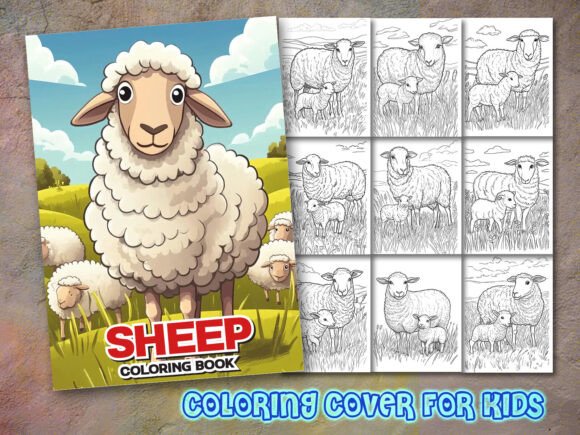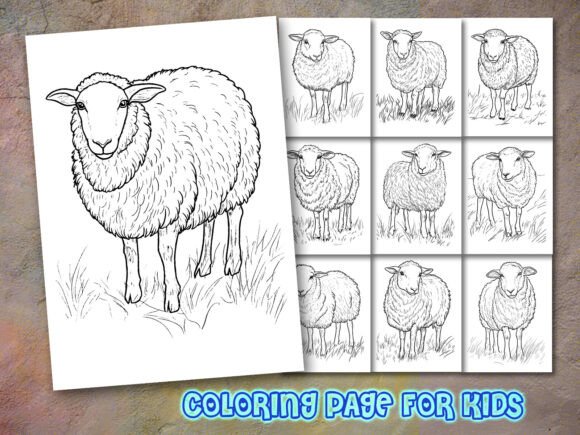
Sheep Coloring Page for KDP
A Soft, Friendly Silhouette—But Is It Embroidery-Ready?
First impression? This Sheep Coloring Page for KDP feels like a gentle pause in a busy day—rounded, approachable, and quietly charming. The line work is clean and confident, with soft curves and minimal internal detail: no tiny hooves, no intricate fleece texture, no fussy facial features. That’s not a flaw—it’s a design decision. As an embroidery designer who’s stitched everything from hyper-realistic florals to minimalist monograms, I immediately saw its potential as a foundation, not a final layer. It’s built for clarity at small scales, which makes it ideal for baby onesies, linen tea towels, or embroidered patches meant to read well from across a craft fair table.
Where It Shines: Real Projects, Real Fabric
Last week, I prepped a custom order for a boutique selling organic cotton aprons for new parents—and this Sheep Coloring Page for KDP was my top contender for the chest pocket. Why? Because its open, uncluttered shape holds up beautifully when translated into satin stitch or gentle fill stitch. On a medium-weight woven fabric with tear-away stabilizer, it stitched cleanly at 3.5" wide—no skipped stitches, no thread nesting in corners. Customers responded warmly to the handmade warmth it added without overwhelming the apron’s clean aesthetic.
It also worked well on a lightweight sweatshirt (cotton-poly blend) using a light cutaway stabilizer and reduced stitch density. The sheep retained its friendly expression—not flattened or pixelated—because the original lines had enough breathing room for thread to follow naturally. For Etsy sellers offering personalized gifts, that’s gold: one design, multiple applications (tote bag, pillow cover, baby blanket corner), consistent brand tone, zero redesign needed.
Where to Pause—and Test First
Don’t assume it’ll behave the same on every surface. On dark fabric, especially charcoal or navy, test contrast carefully: the outline needs enough weight to read clearly in thread, and thin interior lines may vanish unless you adjust stitch width or add a subtle underlay. On stretchy knits (like toddler t-shirts), the shape can distort if stabilizer isn’t firm enough—or if hoop tension slips mid-stitch. And on curved surfaces like caps? Stick to versions under 2.5"—the rounded crown compresses fine details, and this design’s smooth contours help, but only if scaled thoughtfully.
I tried a version on a textured linen tea towel and found the outer line held up, but any attempt to add interior stitching (like a tiny flower or “Joy” beneath the sheep) got lost in the weave. So treat this as a strong single-element embroidery file—not a layered applique design or complex multi-part motif. If your project relies on fine detail or tight corners (think: embroidered cap visors or tiny patch borders), review the PNG files closely before digitizing. Zoom in: are all edges crisp? Do any lines taper too sharply for reliable satin stitch coverage?
Design Assets That Build Trust—Not Just Decoration
What sets this Sheep Coloring Page for KDP apart isn’t just its look—it’s how it supports your credibility as a maker. When customers see clean, intentional line work on a finished product—a hand-stitched nursery pillow, a boutique tote—they subconsciously register care and consistency. That matters more than ever for small shop owners and craft fair vendors competing on authenticity, not just price. This design doesn’t scream “clip art.” It whispers “thoughtful,” which aligns perfectly with handmade product positioning.
That said, don’t skip due diligence. Before listing embroidered items on Etsy or packaging them as wedding favors, confirm licensing terms. The listing says “for KDP and Kids”—but does that include commercial embroidery use? Does it allow resale of finished physical goods? Always verify. Also, check whether the 10 PNG files include varied sizes or just one resolution repeated. For versatility across projects (baby onesie vs. large pillow cover), having at least three scalable options is ideal.
Practical Notes Every Embroidery Designer Should Run Through
- Test first on scrap fabric—especially if using textured, dark, or stretchy materials.
- Review stitch density in your digitized version; high-density fills can overwhelm delicate shapes like this sheep’s ears or legs.
- Confirm hoop size compatibility: the original PNG likely needs resizing—don’t force a 4.5" version into a 4" hoop without checking distortion.
- Inspect small details at 200% zoom: are outlines at least 2px thick? Thin lines won’t translate cleanly to thread.
- Mock it up in black and white before choosing thread colors—contrast is what makes this design legible, not complexity.
- Compare light and dark fabric backgrounds digitally before stitching; some line weights disappear on deep tones.
- Use proper stabilizer—lightweight cutaway for knits, tear-away for stable wovens, and avoid over-stabilizing, which dulls the softness this design conveys.
- Check dual-use viability: does your digitized version work equally well for personal gifts and commercial embroidery projects? Consistency here saves time long-term.
Final Thought: A Quiet Workhorse, Not a Showstopper
This Sheep Coloring Page for KDP won’t win awards for technical dazzle—but it wasn’t built to. It’s a quiet, reliable design asset: easy to digitize, forgiving to stitch, and emotionally resonant across age groups and product types. For craft business owners building cohesive collections (nursery decor, kitchen linens, kids’ apparel), it’s a smart anchor—simple enough to repeat, warm enough to feel personal, and flexible enough to scale across your offerings. Just remember: even the friendliest sheep needs thoughtful execution. Test, adjust, and trust your eye—not just the file name.