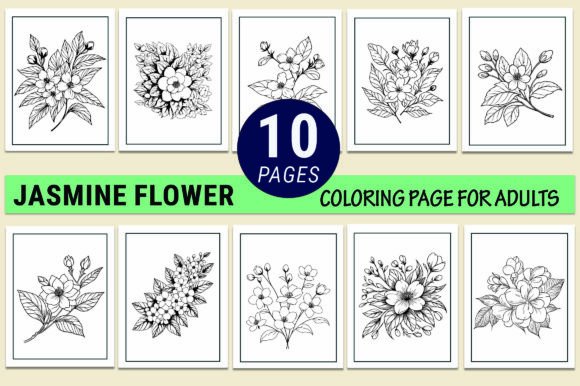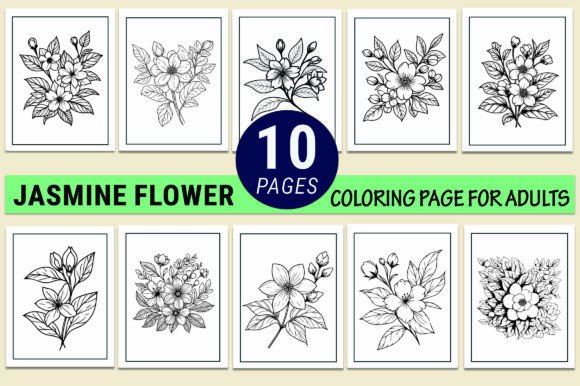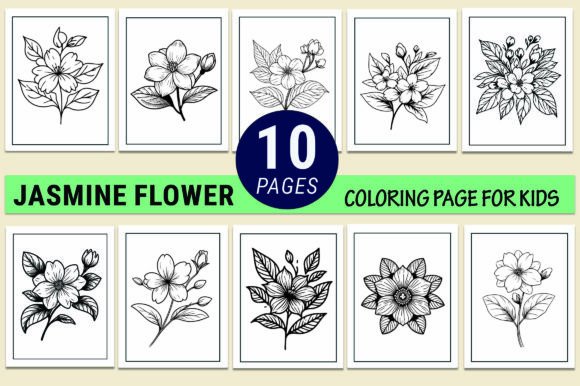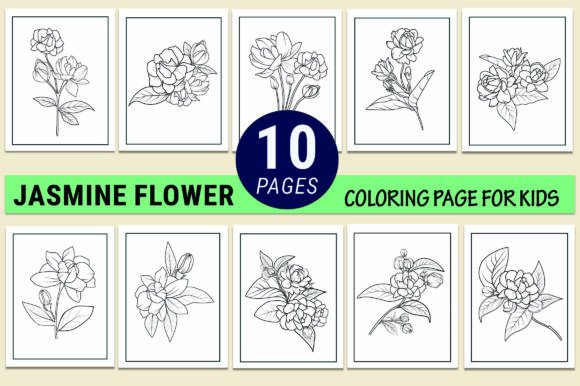
Hand Drawn Jasmine Flower Coloring Pages: Graphics & Coloring Pages
First Impression: Delicate, Warm, and Authentically Handmade
Opening Hand Drawn Jasmine Flower Coloring Pages, I immediately felt the quiet confidence of a well-executed hand-drawn aesthetic—soft linework, organic petal curves, and intentional negative space. This isn’t sterile vector tracing; it’s a graphic design asset that breathes. As a designer who regularly builds brand identities for handmade businesses and seasonal campaigns, I recognized its tone instantly: botanical, gentle, artisanal—ideal for a local apothecary launching a spring wellness line or an Etsy seller curating a “slow living” printable collection. The mood is calm but not passive—it invites interaction, whether through coloring, cutting, or layering into larger compositions.
Where It Shines in Real Client Projects
In my recent work for a small-batch tea brand, I tested Hand Drawn Jasmine Flower Coloring Pages across multiple touchpoints—and it performed strongest where authenticity and tactile warmth mattered most. For packaging design, I placed a single jasmine bloom as a subtle corner motif on kraft tea box labels; its hand-drawn quality elevated the perceived craftsmanship without competing with typography. In social media graphics, I used the vector files to build Instagram carousel slides—layering jasmine outlines over soft watercolor backgrounds for a cohesive, editorial feel. As a printable design, it worked beautifully in Canva templates for planners and self-care journals, and as a Cricut project, the clean vector paths cut flawlessly on cardstock for custom gift tags.
It also strengthened product mockups—especially for mugs, tote bags, and ceramic packaging—where the floral motif added decorative charm without overwhelming. As part of a themed collection, these Coloring Pages became the visual anchor for a spring-themed digital product bundle: one file adapted for t-shirt design (simplified outline), another scaled for sublimation design on pillowcases, and a third layered into a blog header as SVG-based web design decoration. Its versatility as both illustration and functional clipart made it a rare dual-purpose creative design asset.
Strategic Placement: Hero, Accent, or Supporting Element?
Hand Drawn Jasmine Flower Coloring Pages excels in large layout areas—think poster-sized wall art for boutique retail spaces, hero graphics for landing pages, or full-bleed backgrounds in editorial design. Its 8.5×11 inch vector scale means it scales crisply for print-on-demand use, and the Adobe Illustrator origin ensures full editability: adjust stroke weight, isolate petals, recolor stems, or integrate with custom type treatments. I’ve used it effectively as decorative accents on invitations, as border elements in newsletter headers, and as sticker design foundations for eco-conscious brands.
It’s especially powerful in campaign visuals tied to mindfulness, botanical wellness, or feminine-led small business branding—where emotional appeal and visual trust are critical. The organic rhythm of the lines supports audience engagement more than rigid geometric patterns would, and its consistent style helps reinforce brand consistency across touchpoints when used intentionally—not as filler, but as a signature motif.
Where to Proceed With Intention
This graphic design asset shouldn’t be forced into minimalist corporate materials, dense data-driven reports, or ultra-modern tech branding—its warmth reads as “handmade,” not “high-tech.” Avoid using it at very small sizes (under 0.5 inches tall) where delicate linework blurs or loses definition. On crowded layouts—say, a busy festival flyer with multiple fonts and icons—the jasmine outlines can visually compete unless given breathing room. And while it pairs beautifully with script fonts and soft serif faces, it clashes with aggressive display fonts or rigid sans serifs unless carefully balanced with ample contrast and spacing.
Also note: because it’s designed as a coloring page, some versions include interior detailing (veins, stamen lines, shading guides) that may distract in logo design or clean packaging applications. Always simplify or remove those layers if clarity and scalability are priorities.
Designer Notes Before Client Use
- Test in black and white first—confirm linework holds up in grayscale for print-on-demand and monochrome merch.
- Check contrast on both light and dark backgrounds; some strokes may need slight thickening for legibility on navy or charcoal.
- Preview at actual size: zoom out to 25% to assess visual hierarchy, then zoom in to 200% to inspect anchor points and path smoothness.
- Place it on real product mockups—not just flat previews—to evaluate proportion and emotional resonance.
- Test print quality on your target paper stock; fine lines may feather on uncoated matte paper.
- Verify file formats: confirm SVG retains transparency, PNGs have clean alpha channels, and AI files are unlocked and editable (no embedded raster).
- Compare how it interacts with your brand’s core fonts—try pairing with serif (e.g., Playfair Display), sans serif (e.g., Montserrat), script (e.g., Pacifico), and handwritten options to gauge harmony.
- Cross-check commercial license terms—this is a digital printable Jasmine Coloring Book KDP Interior, built for resale and client projects, but always confirm usage scope before deploying in Etsy products or subscription-based digital offerings.
Final Verdict: A Thoughtful, Flexible Creative Marketplace Asset
Hand Drawn Jasmine Flower Coloring Pages isn’t just another clipart download—it’s a considered visual voice. When aligned with the right client goals—handmade business branding, seasonal campaign storytelling, or printable design systems—it adds sincerity, texture, and quiet sophistication. As a professional designer, I appreciate that it arrives production-ready yet remains deeply editable—a rare balance in today’s creative marketplace. Used with intention, it strengthens visual hierarchy through contrast and mood, deepens emotional appeal without cliché, and delivers measurable polish to marketing visuals, packaging design, and digital products alike. Just remember: its power lies not in ubiquity, but in thoughtful placement.